The security situation in the Middle East has deteriorated sharply following large-scale military operations involving the United States, Israel, and Iran from 28 February 2026. For shipowners, operators, and crew management companies, the implications are immediate and significant. This advisory outlines the current status of all active High Risk Areas, the entitlements now in force for seafarers, and Crossworld’s position and compliance across all affected zones.
IBF High Risk Area Designation — Strait of Hormuz, Persian Gulf & Gulf of Oman
Effective 2 March 2026, the International Transport Workers’ Federation (ITF) and the Joint Negotiating Group (JNG), as social partners of the International Bargaining Forum (IBF), formally designated the Strait of Hormuz and surrounding waters as a High Risk Area (HRA).
This designation followed confirmed attacks on commercial vessels, Iranian warnings broadcast on VHF Channel 16 declaring the Strait closed to shipping, and the withdrawal of P&I war risk cover for vessels transiting from 5 March 2026. The IMO has urged maximum caution and advised vessels to avoid the area where possible. Over 200 vessels were anchored in or near the Strait as of early March.
While the Strait remains legally open under international law, the operational reality is that it is effectively closed to the vast majority of commercial shipping. The IBF designation is under active review for potential upgrade to a Warlike Operations Area, which would activate additional crew protections.
What the HRA Designation Means for Crews
For seafarers covered by IBF agreements operating in the Persian Gulf, Strait of Hormuz, and Gulf of Oman, the following entitlements are now active:
- Bonus equal to basic wage, payable for the actual duration of stay or transit within the HRA
- Doubled compensation for death and disability
- Right to refuse sailing, with repatriation at the company’s cost and compensation equal to 2 months’ basic wage
- Security arrangements equivalent to ISPS Level 3 are strongly recommended
For the IBF Extended Risk Zone (Gulf of Oman), the bonus and doubled death & disability compensation are triggered only in the event of an actual attack on the vessel. Enhanced BMP level is required throughout this zone.
Shipowners and operators are required to conduct rigorous enhanced risk assessments prior to any transit and must ensure crews are provided clear and timely information on security conditions, with full implementation of all contractual, insurance, and safety protocols.
DMW Advisory No. 09 — Series of 2026
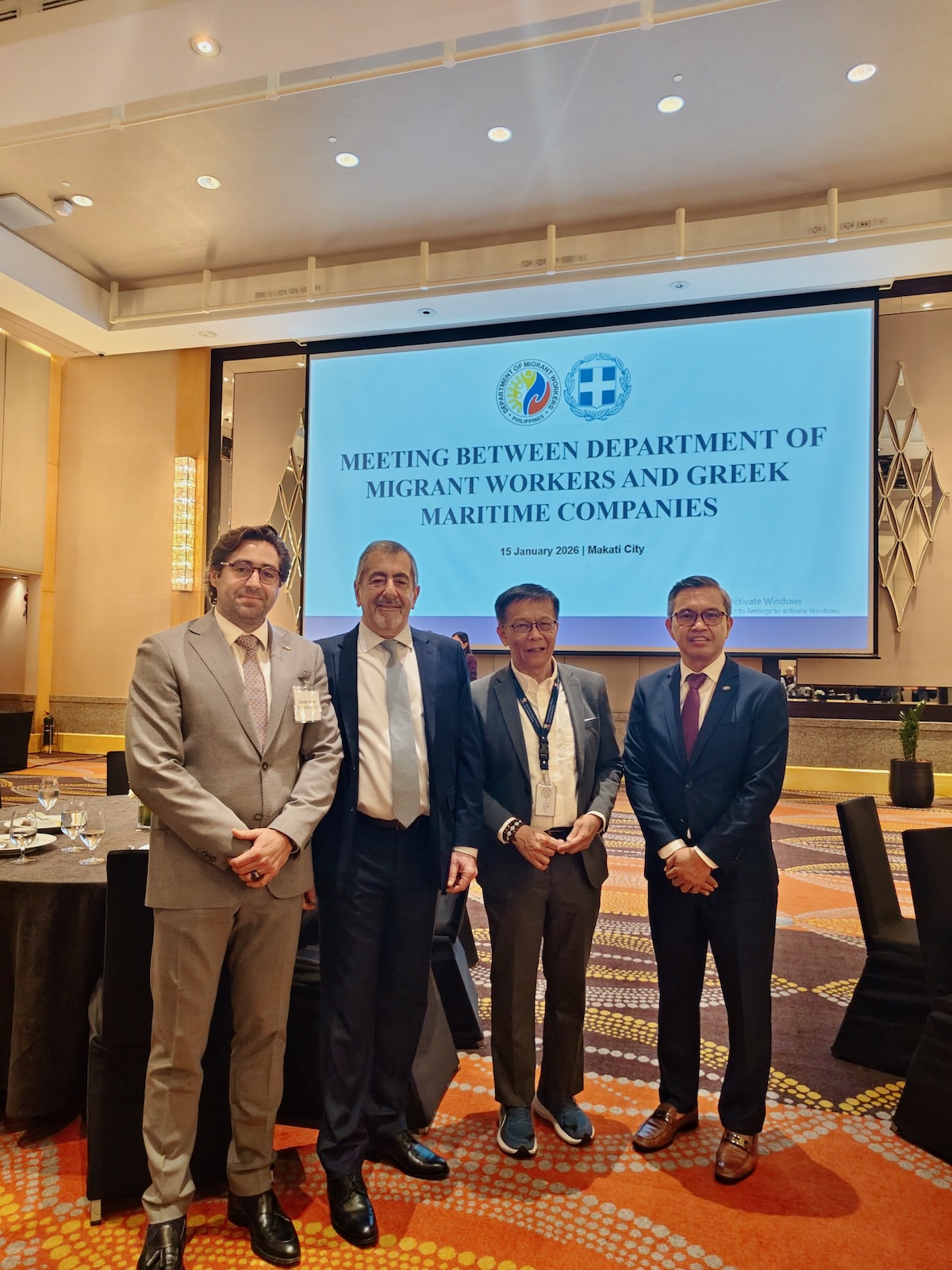
On 01 March 2026, the Philippine Department of Migrant Workers (DMW) issued Advisory No. 09 of 2026, addressing the implications of the Middle East escalation for Filipino seafarers. All Licensed Manning Agencies (LMAs), principals, and shipowners are directed to comply with the following, in accordance with existing DMW policies and the Magna Carta of Filipino Seafarers (R.A. 12021):
Vessel Routing
Passage of vessels carrying Filipino seafarers through the Strait of Hormuz must be avoided unless absolutely necessary and supported by a comprehensive security risk assessment. Shipowners and operators are strongly encouraged to consider alternative routing to mitigate exposure to armed conflict, missile threats, and maritime security incidents.
Suspension of Crew Change Operations
Crew change operations are suspended at all conflict-affected ports and transit points in the Middle East and nearby regions with heightened security risk, as determined by the Department of Foreign Affairs (DFA). Alternative safe ports and neutral transit hubs must be identified for crew embarkation and disembarkation.
Shipboard Safety & Preparedness
- Implement enhanced ship security measures: heightened watchkeeping, updated security briefings, and strict adherence to Ship Security Plans
- Confirm the exact location and status of all vessels operating in or near Iranian waters
- Verify the sufficiency of food, water, medical supplies, and essential provisions on board
- Activate contingency and emergency response plans, including evacuation or rerouting options where feasible
- Ensure continuous communication between Principals, Masters, and crew
Welfare of Stranded Seafarers
LMAs and principals must provide immediate assistance to Filipino seafarers stranded at airports or transit areas, including: flight rebooking, provision of meals, communication access, and basic necessities. Under no circumstances shall seafarers be left unattended or required to shoulder expenses arising from security-related travel disruptions. Seafarers awaiting onward travel are entitled to temporary hotel accommodation and transportation.
Salaries & Wages
For seafarers repatriated due to the current situation, applicable wages will be paid in accordance with the prevailing Standard Terms and Conditions (STC). For seafarers who have departed the port of hire but were unable to join their vessel due to circumstances not attributable to the principal or the LMA, salary arrangements will be assessed on a case-by-case basis.
Mandatory Reporting
LMAs are directed to report immediately via the OFW Welfare Monitoring System (OWMS) and to the following DMW offices for any incident, delay, stranding, refusal to sail, or security-related concern involving Filipino seafarers:
- DMW-OASSOC: owms@dmw.gov.ph | seabased.asec@dmw.gov.ph
- Sea-based Accreditation Bureau (SBAB): sbhighrisk@dmw.gov.ph
Periodic updates on affected seafarers must be submitted until their safety is confirmed or the situation is resolved.
HRA Zone Status Summary — March 2026
The table below provides a quick-reference overview of all currently active IBF-designated risk zones and the key crew entitlements applicable in each:
| Area | IBF Status | Key Crew Entitlements |
|---|---|---|
| Persian Gulf / Strait of Hormuz / Gulf of Oman | High Risk Area (since 2 Mar 2026) | HRA bonus + doubled D&D + right to refuse. P&I cover withdrawn from 5 Mar. |
| Red Sea / Gulf of Aden / Bab el-Mandeb | Warlike Operations Area | Maximum entitlements: full bonus, doubled D&D, right to refuse + 2 months’ wages on repatriation |
| Black Sea (North) / Ukraine Ports / Sea of Azov | Warlike Operations Area | Maximum entitlements apply |
| Gulf of Guinea | Extended Risk Zone | Bonus & doubled D&D triggered on actual attack only; heightened vigilance required |
Crossworld’s Position & Compliance
Crossworld Marine Services is in full compliance with all applicable IBF, DMW, and flag state requirements across all active High Risk Areas. All internal protocols — including vessel position monitoring, crew briefings, war risk consent documentation, IBF compliance, and DMW mandatory reporting — are being implemented and updated on a continuous basis.
We are closely monitoring the evolving situation across all four active HRA zones and stand ready to advise shipowners and principals on crew entitlements, routing implications, and compliance obligations.
It is Crossworld’s firm and longstanding position that the safety and welfare of our crews is non-negotiable and takes precedence over any commercial consideration. This is not a reactive posture — it is embedded in how we operate every day.
Principals are encouraged to contact their dedicated Crewing Manager for vessel-specific guidance.
Together Always Ahead.
This advisory will be updated as the situation develops. Last updated: 04 March 2026 — Crossworld Marine Services, Crew Advisory Desk.